EEM and FHA 203k: How to Combine Renovation and Energy Efficiency in One Mortgage
Most renovation loans focus on what buyers can see—new kitchens, bathrooms, flooring, or additions. Energy financing, on the other hand, focuses on what buyers feel—lower utility bills, better comfort, and long-term savings.
What many buyers don’t realize is that these two strategies can work together.
By combining an Energy Efficient Mortgage (EEM) with an FHA 203k loan, buyers unlock one of the most powerful—and least talked about—financing options available today.
What Is the EEM + FHA 203k Combination?
The EEM and FHA 203k pairing allows borrowers to finance:
Visible renovations (repairs, updates, structural work)
Invisible efficiency upgrades (energy-saving improvements)
…all within one FHA-insured mortgage.
The FHA 203k covers the renovation scope, while the FHA 203k energy efficient mortgage feature allows approved energy improvements to be included—often with minimal impact on monthly payments.
Why This Is a “Powerhouse Pairing”
Most homes—especially older properties—need both cosmetic updates and efficiency improvements. Separately, these upgrades are often financed with different loans or delayed altogether.
Together, this renovation and energy efficiency loan strategy allows buyers to:
Renovate once, not twice
Finance upgrades at mortgage interest rates
Improve comfort and performance immediately
Lower long-term operating costs
It’s a smarter way to renovate from the start.
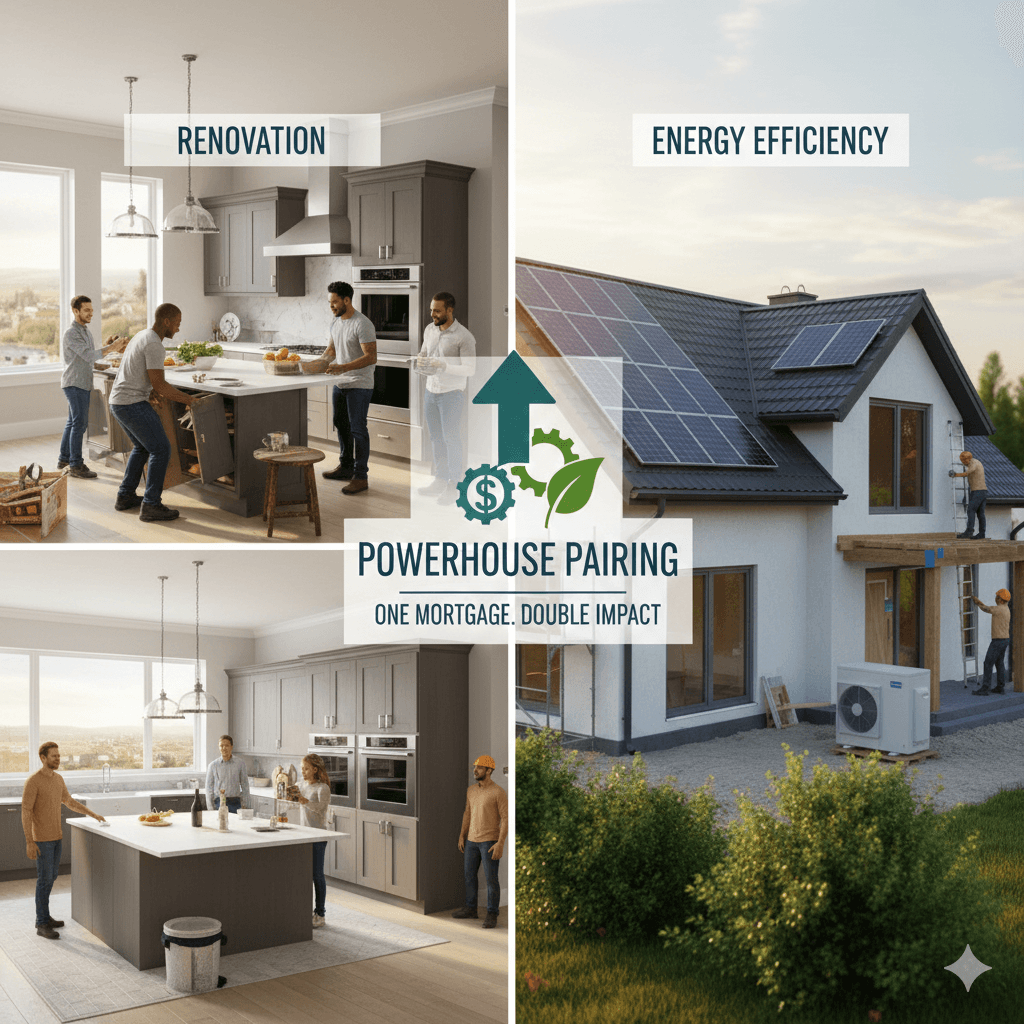
What the FHA 203k Covers?
An FHA 203k loan can finance a wide range of renovations, including:
Kitchen and bathroom remodels
Flooring, paint, and finishes
Structural repairs and additions
Roofing, plumbing, electrical, and HVAC upgrades
Safety and code compliance work
This is the “visible” side of the renovation.
What the EEM Adds to the Renovation
The Energy Efficient Mortgage component focuses on performance upgrades that buyers often postpone.
Common EEM-funded improvements include:
Insulation and air sealing
High-efficiency HVAC systems
Energy-efficient windows and doors
Water-heating improvements
Renewable or smart energy features
Together, this creates a true green rehab loan—one that improves both livability and affordability.
Why Buyers Usually Miss This Option
This combination is rarely discussed because it sits at the intersection of renovation lending and energy efficiency—two areas that are often handled separately.
Buyers miss out because:
EEMs are misunderstood
Renovation loans feel complex
Energy efficiency isn’t prioritized during underwriting
With proper guidance, this pairing becomes a strategic advantage.
The Long-Term Benefits of Combining Renovation + Efficiency
Buyers who use an EEM + FHA 203k strategy often see:
Lower monthly utility bills
Improved comfort and indoor air quality
Stronger affordability over time
Increased resale appeal
One coordinated renovation timeline
Instead of upgrading in phases, buyers build smarter from day one.
Why Education and Planning Matter
Combining an EEM with an FHA 203k requires planning, documentation, and coordination. When done correctly, it maximizes value. When done poorly—or skipped entirely—buyers lose out on benefits they can’t easily add later.
This is where professional guidance changes outcomes.
Thinking about renovating?
Don’t just upgrade what you can see—upgrade what you pay for every month.
Let’s build a smarter, more efficient plan that combines renovation and energy efficiency into one powerful financing strategy.
If you’d like to learn more, click the link below for more information.

HEY, I'M WALTER L. WILLIAMS
Walter L. Williams was born and raised in the City of Detroit. He has two associate degrees, one in Applied Science Architectural Building Construction Technology from Schoolcraft Collage and an Associate of Arts in Liberal Arts from Henry Ford Collage.
Walter has been in the Building Services business for over 30 years as an Architectural Draftsperson working for Detroit Water and Sewerage, City Engineering Department and his current companies, People, Places & Things LLC, Residential Design and Space Planning, PPT Inspections, Home and Building Inspections, My Rehab Consultant, FHA HUD 203K Consultant and one of the founders of New Decade - New Home Educational.


Home Buyers University: Start Here

Embark on your homeownership journey with New Decade - New Home, a comprehensive program providing valuable insights and education for first-time buyers, those seeking to upsize, or those aiming to create generational wealth through property investment.
Upcoming Events
NDNH Contractor's 201 Workshop (3 - 4 Hours):
September 12, 2026 - Contractor 201 Workshop at Our Gathering Place
Workshops (3 - 4 Hours):
September 12, 2026 - Contractor 201 Workshop at Our Gathering Place from 9 am - 12 noon
November 19, 2026 - 10th Annual Veterans Resource Fair. Location: Wayne County Community College NW Campus
Online Webinars (1 hour):
Every 4th Thursday of the month (August 20, 2026)
Contact Us
Phone: 313-799-3760
Email: seminar@newdecadenewhome.com
© New Decade New Home